Silence in the snow - reflections on winter nature and wildlife photography
There is something quietly instructive about spending a day in nature, especially when nothing dramatic happens. No rare species, no "perfect light", no "decisive moments" worthy of a field guide or a gallery wall. Just cold air, familiar, common birds, a slow walk, and time passing at what feels like a slower pace.
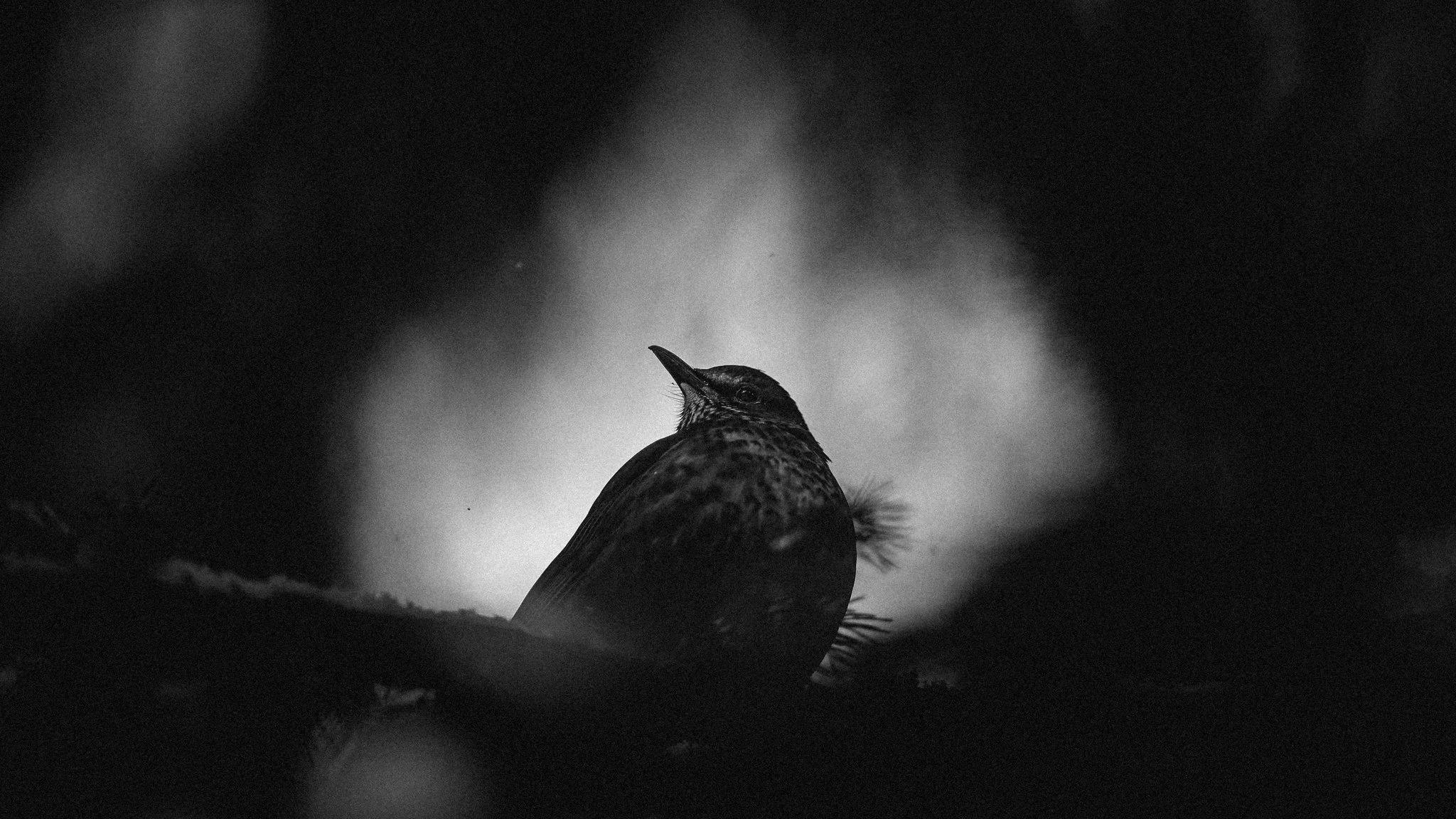
Common blackbird (Turdus merula). Canon R6 + Sigma 105mm f/1.4A. 1/800, f1.4, ISO400
I enjoy nature deeply, not as a spectacle, but more as a condition, as what it is. Being outside, especially among trees, birds, and, today, snow, induces a kind of mental deceleration, an internal slower pace. Psychologists might describe this as a reduction in cognitive load or a shift from directed attention to what is sometimes called “soft fascination.” Whatever the label, the experience is unmistakable each time I step into nature: irritating thoughts loosen their grip, breathing becomes easier, and each moment feels momentarily sufficient, just as it is. There are no expectations for each minute.
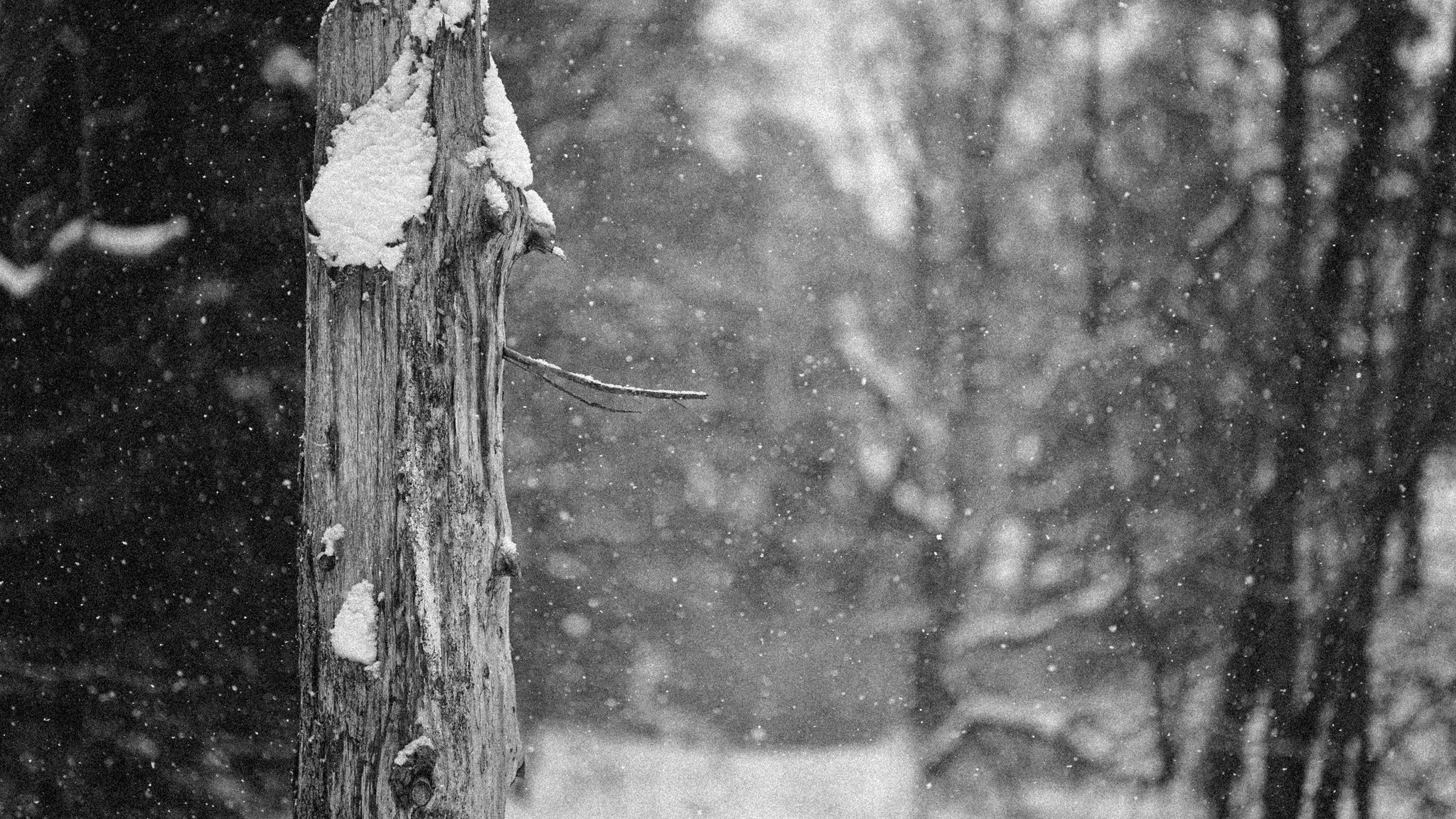
Winter day in Seurasaari, Helsinki, Finland. Canon R6 + Sigma 105mm f/1.4A. 1/250, f1.4, ISO200
Today, while visiting Seurasaari here in Helsinki, Finland, that effect was amplified. It was cold, around −8 °C, with a light snowfall. Snow has a peculiar acoustic property. It absorbs sound. In cold weather, especially during snowfall, the environment becomes hushed in a way that feels almost engineered. The absence of noise does not equal emptyness. It is full, dense, and strangely comforting. Walking through it feels less like moving through space and more like being embraced by it.
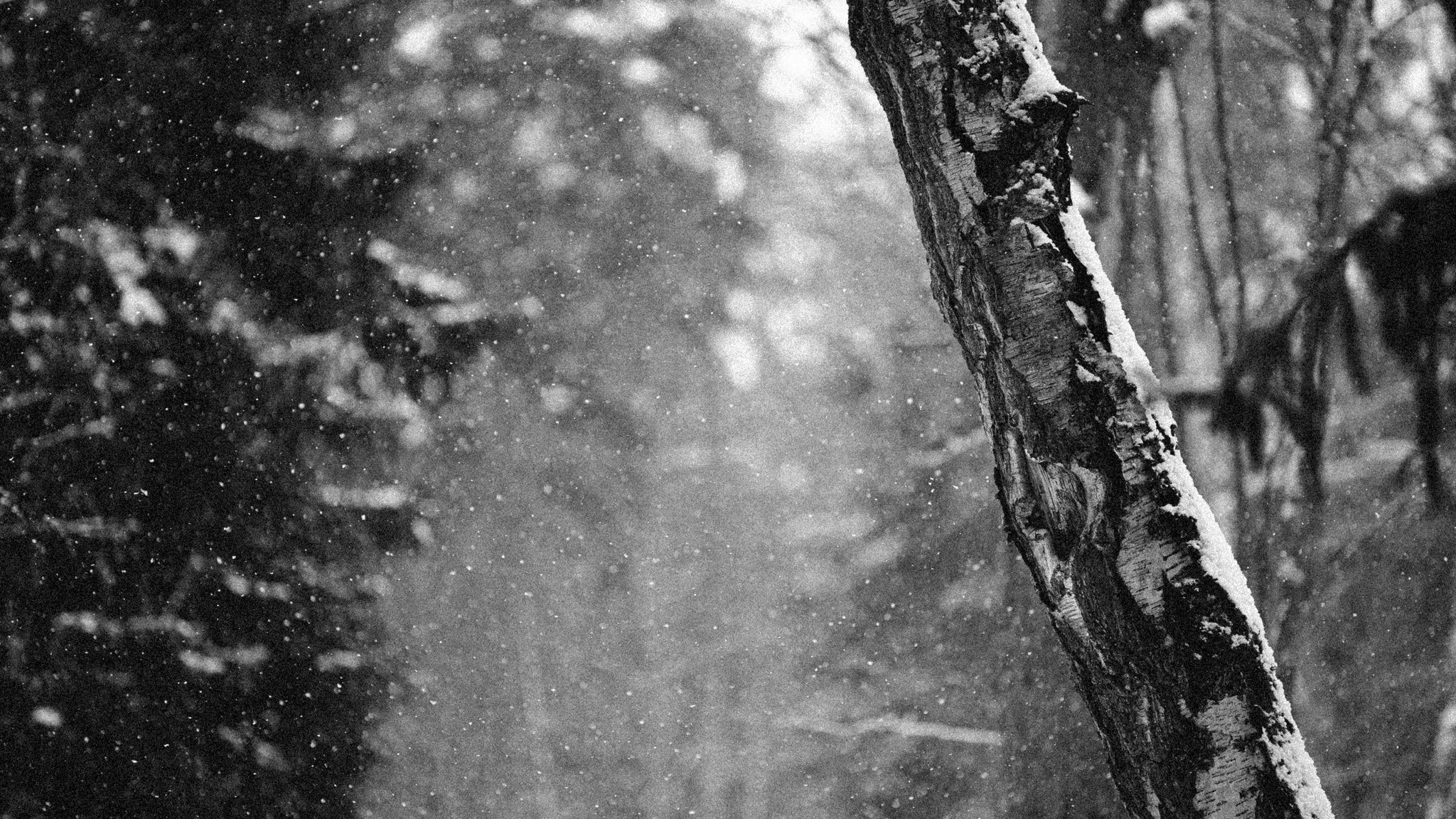
Snowfall in Seurasaari, Helsinki, Finland. Canon R6 + Sigma 105mm f/1.4A. 1/250, f1.4, ISO200
I am not a wildlife photography expert, and I don’t aspire to be one. My photos are not the result of rare access, or deep encyclopedic knowledge. Most of the time, I’m photographing everyday common birds and squirrels, species so familiar they are often overlooked, or not seen as interesting. And yet, trying to capture a good photograph of them is deeply satisfying. These birds and squirrels are quick, alert, inconsistent.
What draws me back is not the pursuit of technical perfection, but attention. I find myself choosing a few birds, or a squirrel, and simply following them or it for a while. Watching how it moves, where it pauses, how it reacts to my presence, or ignores it entirely. Over time, even these ordinary animals begin to feel distinct. Not in a sentimental way, I can't read their minds even if I try to, but in a behavioural one. Patterns emerge. Temperaments differ. There is personality, and that is were it becomes interesting. They might be common, and seen as boring, but much like with people, personalities are what make people different, and thus interesting.
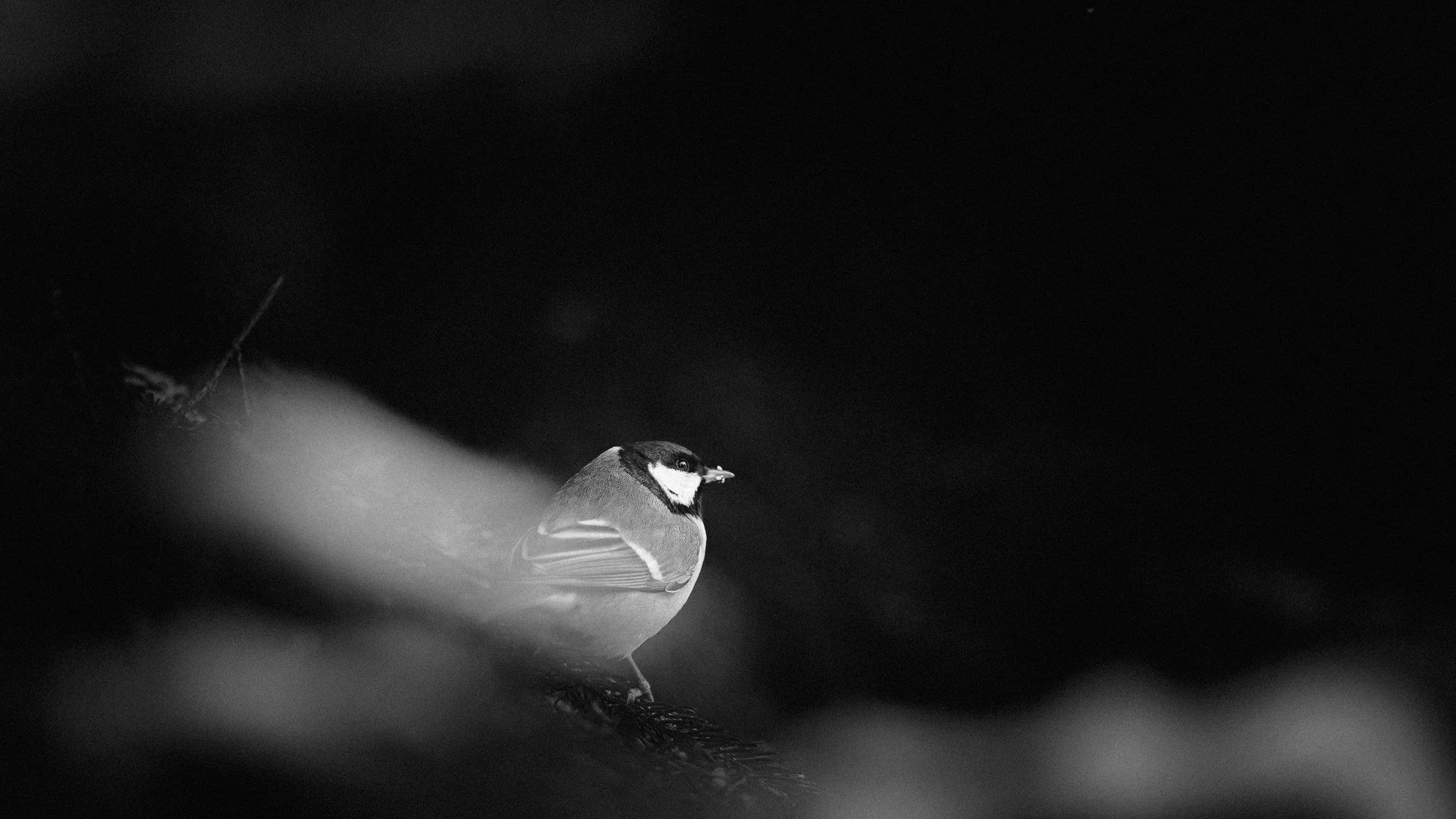
Great tit (Parus major) in Seurasaari, Helsinki, Finland. Canon R6 + Sigma 105mm f/1.4A. 1/400, f1.4, ISO400
I photograph these moments because they feel worth documenting. Not because they are exceptional, but because they are specific. This specific bird, with its personality, on this branch, in this light, on this cold, silent day. For me, that specificity carries meaning. It is a small act of witnessing, the moment existed, and I experienced it.
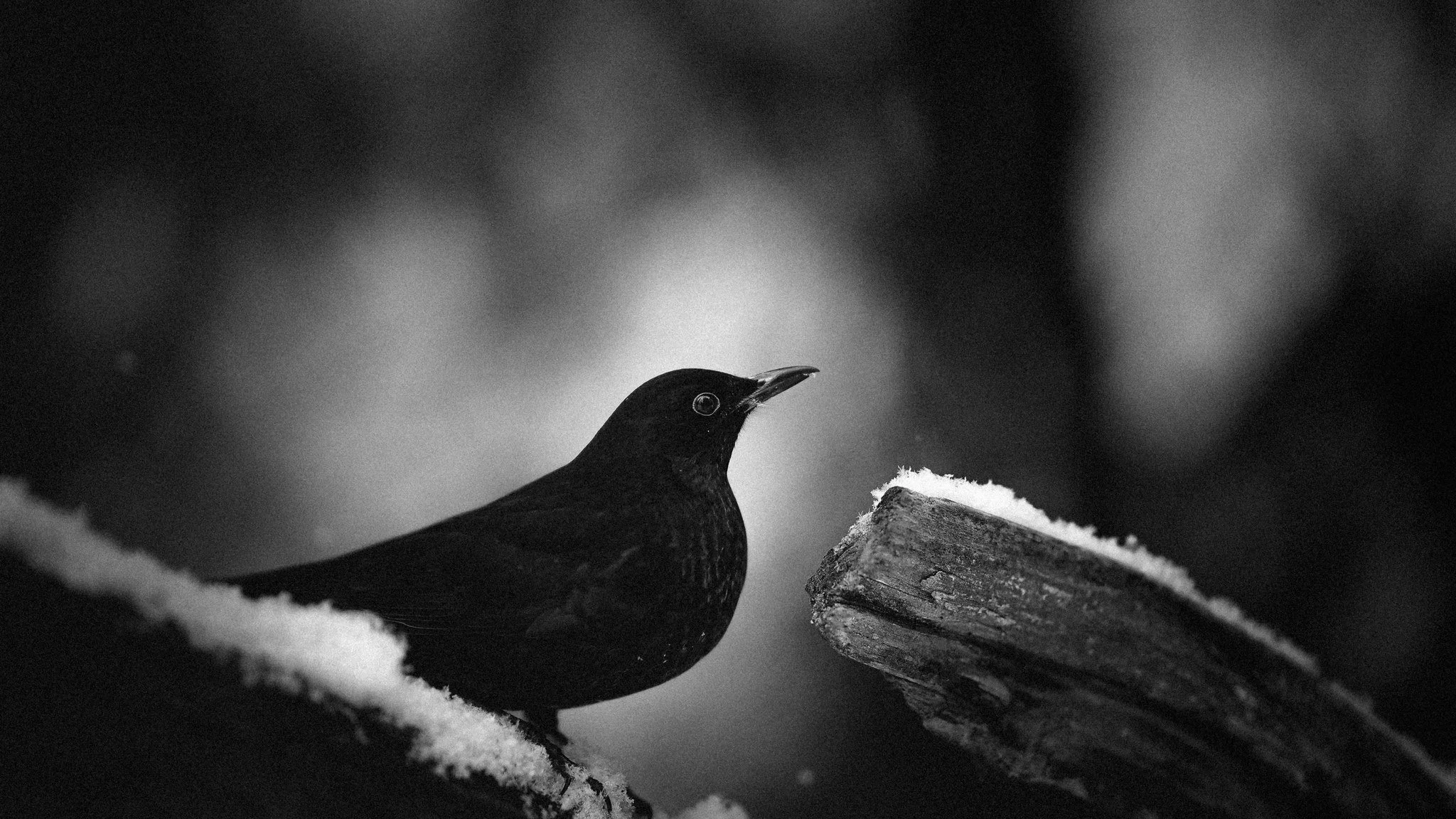
Common blackbird (Turdus merula). Canon R6 + Sigma 105mm f/1.4A. 1/400, f1.4, ISO400
In a world that rewards scale, speed, and spectacle, there is something quietly resistant about paying close attention to the small and the common. Nature, especially in winter, does not demand admiration. It simply continues. Being present with it, calm and unhurried, feels less like an escape and more like a return.
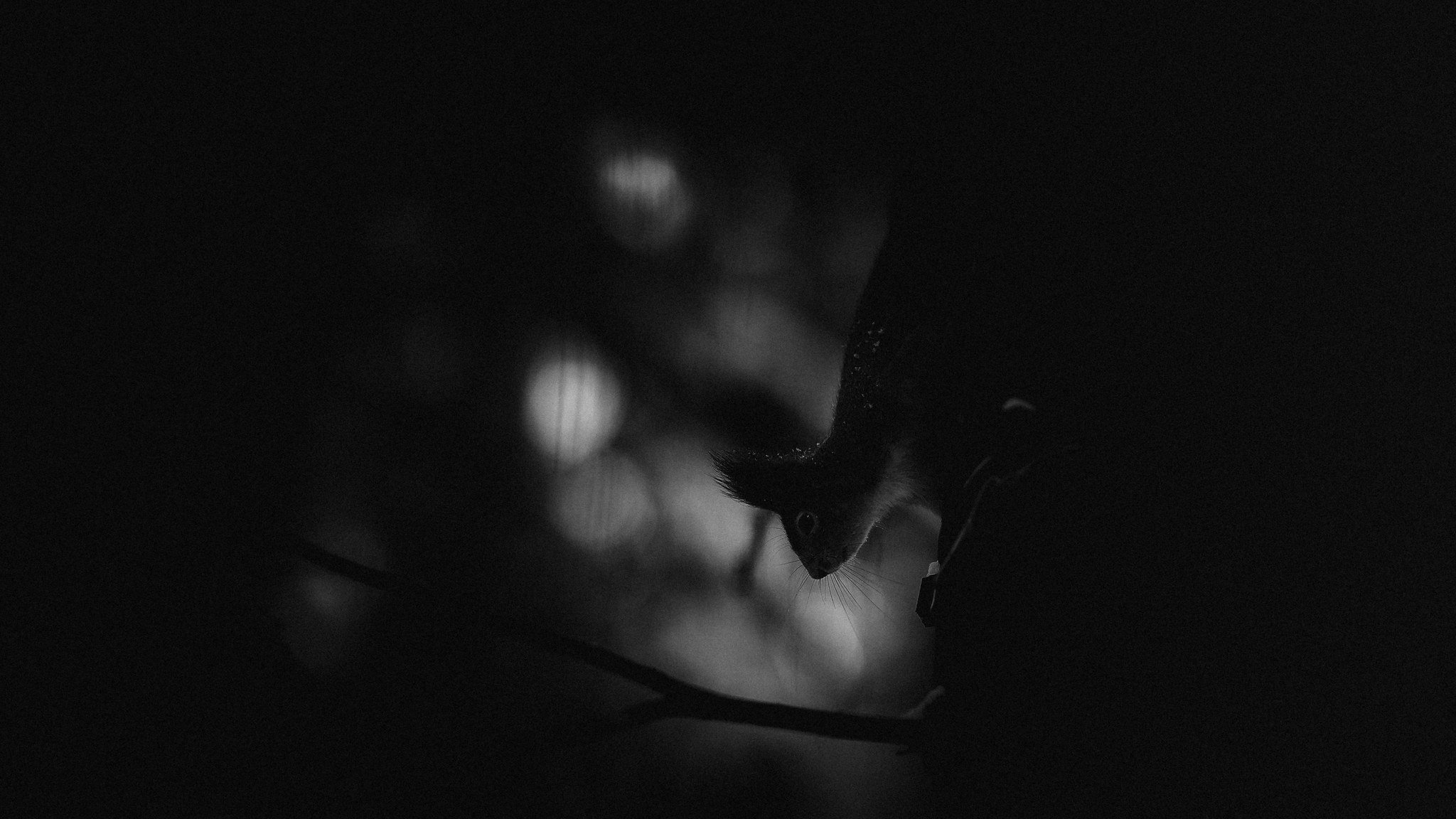
Red squirrel (Sciurus vulgaris). Canon R6 + Sigma 105mm f/1.4A. 1/400, f1.4, ISO800
